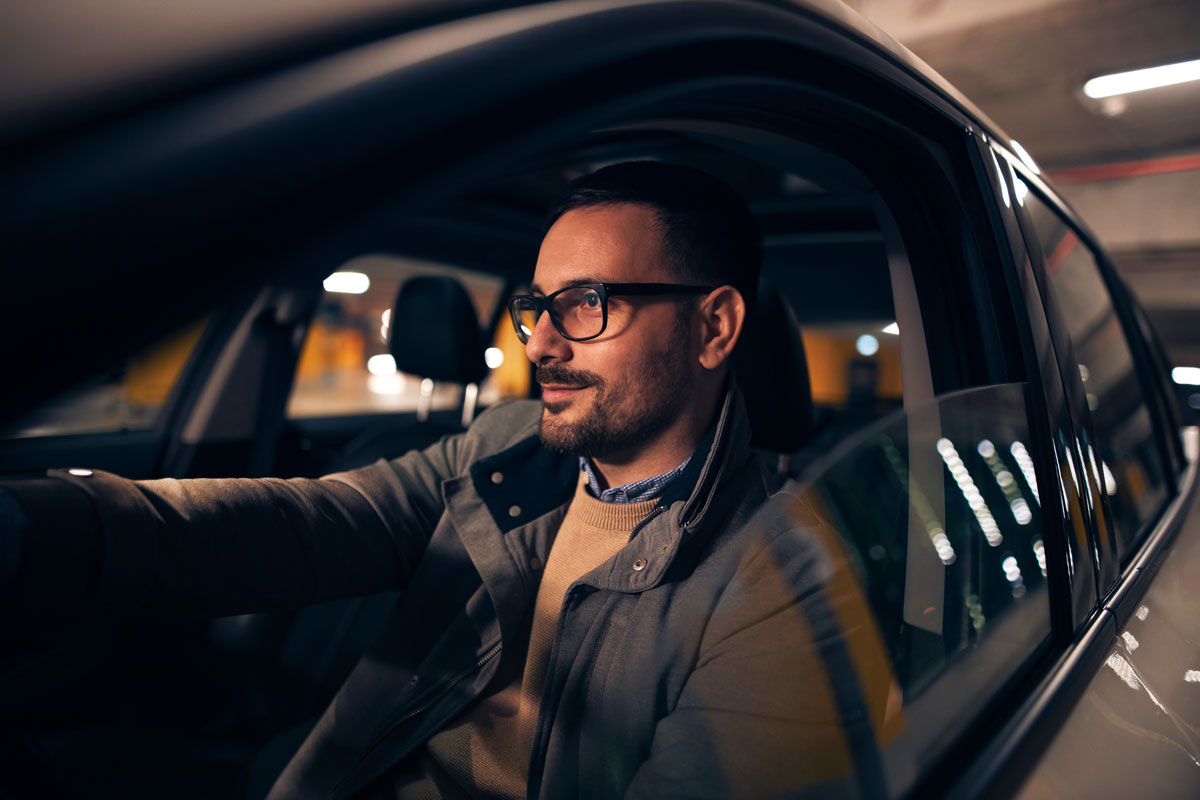
Have you noticed that headlights seem brighter than they used to? Maybe road signs are harder to read, oncoming traffic creates uncomfortable glare, or you find yourself avoiding driving after sunset altogether. These changes can creep up gradually, and it’s easy to dismiss them as a normal part of getting older.
With daylight saving time ending in November, many of us are suddenly driving home in the dark again. If you’re finding nighttime driving more challenging than it used to be, it may be worth taking a closer look at your eye health. Several common vision problems can make driving after dark difficult, and many can be improved with the right treatment.
Why Does Our Vision Change at Night?
Even with healthy eyes, seeing in low light is more challenging than seeing during the day. Our pupils naturally widen in darkness to let in more light, which can make certain vision imperfections more noticeable. As we age, our eyes also become less efficient at adapting to changes in lighting, particularly when transitioning between darkness and bright headlights.
However, there’s a difference between needing a little more time to adjust to the dark and experiencing significant glare, blurry vision, or difficulty recognizing objects on the road. If night driving has become noticeably harder, one of the following conditions may be contributing.
1. Cataracts: When Headlights Become Blinding
Cataracts are one of the most common reasons older adults begin struggling with night driving. As the eye’s natural lens becomes cloudy, light entering the eye scatters rather than passing through clearly. This can make headlights appear unusually bright, create halos around streetlights, and reduce contrast when driving on poorly lit roads.
Cataracts typically develop gradually, so you might notice nighttime driving problems long before your daytime vision seems significantly affected. If cataracts are interfering with your daily activities, cataract surgery can replace the cloudy lens with a clear artificial lens and often improve visual clarity and reduce glare.
2. Astigmatism: Why Lights Look Streaky or Blurry
If headlights appear stretched, starburst-shaped, or surrounded by streaks of light, astigmatism may be contributing to the problem. Astigmatism occurs when the cornea or lens has an irregular curvature, preventing light from focusing evenly on the retina.
Because your pupils enlarge in low light, these visual distortions can become more noticeable at night. Fortunately, astigmatism can often be corrected with prescription glasses or contact lenses. If you’ve had the same prescription for several years, an updated eye exam may make a noticeable difference.
3. Dry Eye: More Than Just Irritation
Dry eye might not be the first condition that comes to mind when you think about night driving, but an unstable tear film can affect how clearly you see. When the surface of the eye isn’t adequately lubricated, vision may fluctuate, and lights can appear blurry or surrounded by glare.
Symptoms may become more noticeable during longer drives, especially when you’re concentrating on the road and blinking less frequently. Air conditioning or heating vents directed toward your face can make dryness worse. Treating the underlying dry eye condition may help improve visual comfort and clarity behind the wheel.
4. An Outdated Glasses Prescription
Sometimes the problem is relatively simple: your vision has changed, and your current glasses are no longer providing the correction you need.
Even small changes in nearsightedness, farsightedness, or astigmatism can become more apparent in low-light conditions. You may see well enough during the day but struggle to read street signs or judge distances after dark. A comprehensive eye exam can determine whether an updated prescription would help, while also checking for other conditions that could be affecting your vision.
If you wear glasses, an appropriate anti-reflective coating may also help reduce distracting reflections. However, so-called yellow-tinted night driving glasses are not a substitute for proper vision correction and may reduce the amount of light reaching your eyes.
5. Age-Related Changes in Your Eyes
Not every change in night vision is caused by a specific eye disease. As we get older, our pupils tend to become smaller and respond more slowly to changes in lighting. The eye’s natural lens also changes with age, which can affect how efficiently light passes through it.
These changes can make it harder to adjust when moving between bright and dark environments. However, significant difficulty driving at night should not automatically be attributed to aging. Conditions such as cataracts, glaucoma, and retinal disease can also affect vision, making a comprehensive eye examination especially important when symptoms are new or worsening.
When Should You Have Your Eyes Checked?
If you’re regularly squinting at road signs, bothered by headlights, or feeling less confident driving after sunset, it’s a good idea to schedule an eye exam. You don’t need to wait until your daytime vision becomes blurry to have your eyes evaluated.
An examination can help determine whether the problem is related to your prescription, cataracts, dry eye, or another condition. Sudden vision changes, particularly those accompanied by eye pain, flashes of light, or a new shadow in your vision, require prompt medical attention rather than a routine appointment.
In the meantime, keeping your windshield and glasses clean, reducing distracting dashboard brightness, and avoiding driving when you cannot see comfortably can help make nighttime travel safer.
See More Clearly With Paragon Eye Associates
Night driving doesn’t have to become something you dread. Whether you’re experiencing increased glare, blurry vision, or difficulty seeing road signs after dark, understanding what’s causing the problem is the first step toward finding a solution.
At Paragon Eye Associates, we provide comprehensive eye care, including vision examinations, dry eye evaluations, and advanced cataract treatment for patients throughout Arlington, Mansfield, and surrounding North Texas communities.
If your night vision isn’t what it used to be, schedule an appointment with our team. We’ll help identify what’s affecting your vision and discuss the treatment options that may help you see more comfortably and confidently, day or night.